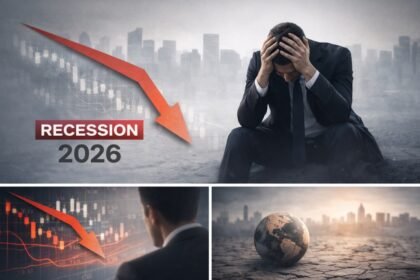
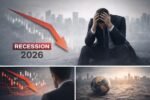

The term “recession 2026” has been appearing frequently in economic discussions, news articles, and online searches. While no one can predict the future with certainty, many people are trying to understand what a potential recession in 2026 could mean and why the topic is gaining attention.
This article explains the concept of a recession, why concerns about 2026 exist, and how economic slowdowns generally affect individuals and businesses
What Is a Recession?
A recession is typically described as a period of significant economic slowdown. It is usually identified by factors such as:
- Reduced economic activity
- Decline in consumer spending
- Slower business growth
- Weakening job markets
Economists often look at indicators like GDP growth, employment levels, and industrial output to assess whether an economy is in recession.
Why Are There Concerns About a Recession in 2026?
Global Economic Slowdown
Many major economies have experienced slower growth in recent years. When large economies slow down, the effects can ripple across global trade, investment, and supply chains.
Interest Rates and Inflation
Periods of high inflation are often followed by tighter monetary policies. Higher interest rates can reduce borrowing and spending, which may slow economic activity over time.
Geopolitical and Supply Chain Pressures
Global conflicts, trade restrictions, and supply chain disruptions can increase costs for businesses and reduce overall economic efficiency. These pressures sometimes contribute to slower growth.
Is a Recession in 2026 Confirmed?
No recession in 2026 has been officially confirmed. Economic forecasts are based on current data and assumptions, which can change due to policy decisions, market behavior, or unexpected global events.
It is important to understand the difference between:
- Predictions based on trends
- Actual economic outcomes, which are known only in hindsight
Possible Signs of an Economic Slowdown
Job Market Trends
During economic slowdowns, hiring may slow down and companies may become more cautious about expansion.
Consumer Spending Behavior
Consumers often reduce discretionary spending during uncertain economic periods, focusing more on essential goods and services.
Business Investment Patterns
Businesses may delay large investments or expansion plans when future demand becomes uncertain.
How a Recession Could Affect India
Impact on Jobs and Hiring
Certain sectors may slow hiring, while others focused on essential services may remain more stable.
Impact on Small Businesses and Startups
Small businesses often face challenges related to cash flow and demand during economic slowdowns, especially those dependent on discretionary spending.
Impact on Prices and Consumer Demand
Changes in demand can influence pricing behavior, promotional activity, and inventory decisions across industries.
How Individuals and Businesses Usually Respond During Recessions
Historically, during recessions:
- Consumers prioritize essential spending
- Businesses focus on efficiency and cost control
- Markets become more cautious and selective
These patterns vary depending on region, industry, and economic conditions.
Recession vs Slowdown: What’s the Difference?
An economic slowdown refers to reduced growth, while a recession generally indicates a more prolonged and widespread decline. Not every slowdown turns into a recession, and recovery timelines can differ significantly.
Final Thoughts
Interest in the topic of a possible recession in 2026 reflects broader concerns about global economic uncertainty. While predictions can highlight potential risks, economic outcomes depend on many moving factors.
Understanding how recessions work helps individuals and businesses interpret news and trends more clearly, without unnecessary panic or assumptions.
Disclaimer This article by SalesBazaar is written for editorial and informational purposes only and does not claim affiliation unless explicitly stated. All insights are independently written for the benefit of our readers