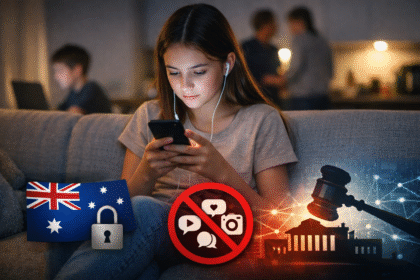




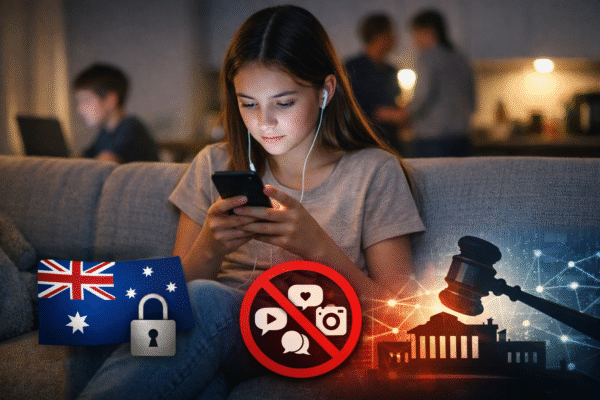
Australia has taken a bold and controversial step by introducing a nationwide restriction on social media access for children below a certain age. The move has triggered global debate, raised serious questions for technology companies, and reopened discussions around digital safety, privacy, and freedom online.
While the policy is specific to Australia, its implications go far beyond one country.
What Is Australia’s Social Media Ban?
The Australian government has introduced rules that place responsibility on social media platforms to prevent young teenagers from creating or maintaining accounts. Instead of punishing children or parents, the law shifts accountability to tech companies, making them legally responsible for enforcing age limits.
In simple terms:
- Children below the defined age threshold are not permitted to use major social media platforms
- Platforms must actively verify user age
- Failure to comply can result in heavy financial penalties
This approach marks a clear shift from earlier policies that relied largely on self-declared age information.
Why Australia Chose This Path?
The ban is rooted in growing concerns around:
- Mental health issues linked to excessive social media use
- Online bullying and harassment
- Exposure to inappropriate or harmful content
- Addictive design patterns aimed at young users
Australian policymakers argue that existing safeguards were ineffective and that voluntary controls by platforms failed to adequately protect children.
Rather than focusing only on parental responsibility, the government chose a system-level intervention, forcing companies to redesign how access works.
How This Changes Social Media Platforms?
For social media companies, the ban creates immediate operational challenges:
1. Age Verification Becomes Mandatory
Platforms can no longer rely on users simply entering a date of birth. They must implement stronger verification systems, which may involve identity checks or new forms of digital authentication.
2. Increased Compliance Costs
Building, maintaining, and auditing age-verification systems adds cost and complexity, especially for global platforms operating across different legal systems.
3. Privacy Trade-Offs
Ironically, stronger age checks may require collecting more personal data, raising concerns about user privacy and data security.
How Teenagers Are Likely to Respond?
History shows that young users adapt quickly to restrictions. Possible outcomes include:
- Migration to smaller or lesser-known platforms
- Increased use of messaging apps and gaming communities
- Attempts to bypass age checks using borrowed credentials
This raises a key question: Does banning access reduce harm, or simply push it elsewhere?
The Broader Global Impact
Australia’s decision is being closely watched by governments worldwide. If the ban is seen as effective, other countries may adopt similar policies or introduce stricter digital age laws.
For countries like India, where smartphone access among teenagers is growing rapidly, Australia’s experiment could influence future debates on:
- Child online safety
- Platform accountability
- Digital rights vs protection
The move signals a shift toward hard regulation instead of self-regulation.
Supporters vs Critics
Supporters Say:
- Children deserve stronger protection online
- Platforms profit from addictive engagement models
- Governments must intervene when private systems fail
Critics Argue:
- Age bans don’t address root causes
- Education and parental involvement matter more
- Restrictions may limit healthy digital participation
Both sides agree on one thing: the digital world has outpaced existing laws.
What This Means for the Future of the Internet?
Australia’s social media ban may mark the beginning of a new phase in internet governance—one where:
- Platforms are treated more like regulated utilities
- Child safety becomes a legal obligation, not a policy promise
- Digital freedom is balanced against societal responsibility
Whether the ban succeeds or struggles, it has already changed the global conversation.
Final Thoughts
Australia’s social media ban is not just about children or technology—it’s about how societies choose to shape the digital environments they live in.
As governments, companies, parents, and users navigate this transition, one thing is clear: the era of hands-off regulation for social media is coming to an end.
At SalesBazaar.online, we continue to track how policy, technology, and consumer behavior intersect in a rapidly changing digital world.