




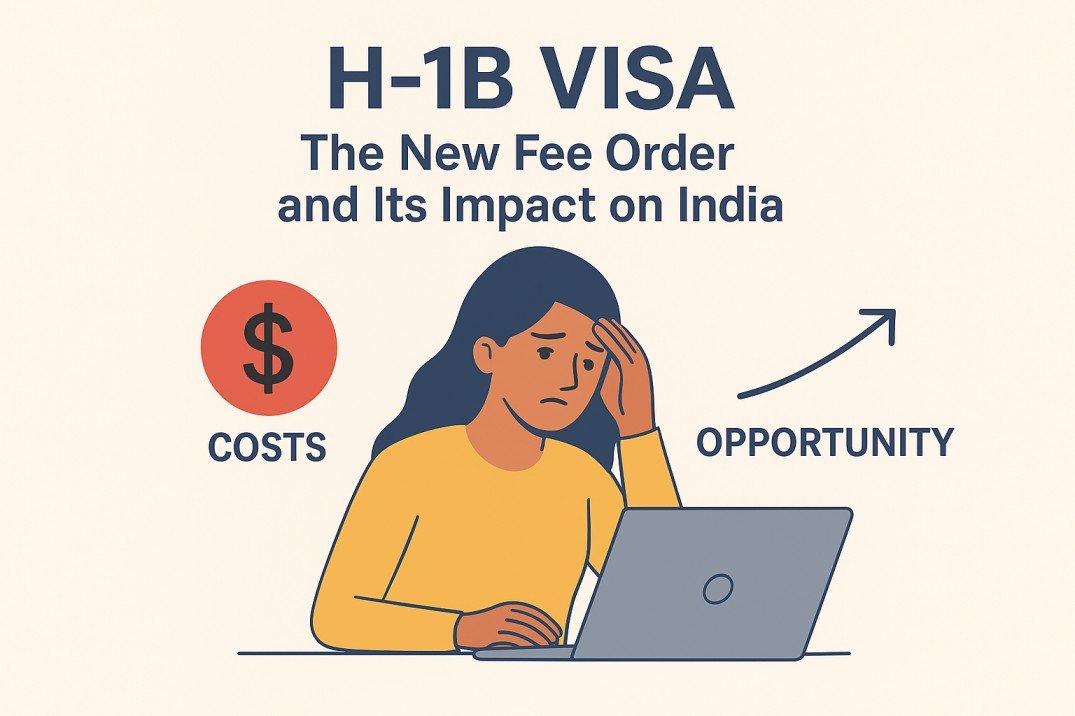
Lately, there’s been a major shakeup in how the U.S. handles the H-1B visa program. As someone watching this closely, I see both serious challenges and potential pivots for India, especially in the IT workforce, startups, and tech talent mobility.
What’s Changed: The New Fee Structure
Here are the key fee updates under the recent U.S. proclamation:
- A new $100,000 annual fee is being imposed on many new H-1B visa petitions. Starting September 21, 2025, U.S. employers sponsoring foreign workers under the H-1B category will need to pay this fee.
- This fee is in addition to existing costs — like the lottery registration fee, filing fees, legal/attorney fees, travel/relocation expenses, etc.
- The new proclamation also includes stricter wage requirements: H-1B candidates may need to meet higher prevailing wage thresholds.
- There is a transition clause: current H-1B holders may not be immediately affected, but renewals, extensions, or entry after the effective date could trigger the new fee requirements.
How It Affects India
Here’s how this change could ripple through:
- Startups & Smaller Companies at Risk
Startups or smaller firms with limited cash flows might struggle to absorb the new fee, potentially losing competitiveness when compared to large firms that can afford these costs. - Higher Sponsorship Costs for Indian Firms
Companies that sponsor many H-1Bs — especially large Indian service providers or product firms — will see a big jump in their cost of doing business. The $100,000 fee per petition is huge relative to earlier fees. - Fewer Entry-Level Opportunities Abroad
For mid-level or junior professionals, the new cost makes H-1B sponsorship more expensive, which might lead firms to limit the number of visas they apply for those levels. - Remote Work Gains More Favor
Because sending someone physically to the U.S. becomes costlier, more work may stay remote. Indian teams could handle more client work from India rather than traveling or relocating abroad. - Remittances & Immigration Expectations Shift
Individuals planning to move to the U.S. might rethink. Those expecting long-term stay or permanent move may face higher costs, which might reduce the number of aspirants or push more to settle locally.
Potential Upsides & Opportunities
- Despite the obvious challenges, here are some silver linings I believe might emerge:
- Talent Retention in India: More people might choose to stay, build careers locally, or start their own ventures if moving abroad becomes too expensive.
- Higher Value Roles Emphasized: Employers will likely be more selective, pushing professionals to upgrade skills, specialize, and take up higher responsibility roles to justify the cost.
- New Foreign Markets: Indian talent might increasingly explore visas, remote opportunities, or relocation options in countries with more favorable immigration or visa frameworks.
Way Forward
Here are steps I feel Indian professionals, companies, and policy-makers should consider:
For Individuals:
- Invest in deeper skills in high demand (AI/ML, cloud, cybersecurity, data science) so your profile remains attractive.
- Keep multiple career paths open — remote roles, global freelancing, or positions in other geographies.
- Be aware of timelines and new rules to avoid getting caught by fee increase deadlines.
For Companies:
- Model the financial impact of the new fee under different scenarios (how many H-1B visa sponsorships, what kind of roles, what wage levels).
- Shift more towards remote delivery or hybrid models to reduce dependency on physical relocation.
- Encourage internal training so that talent can fill roles without needing relocation.
For Policy Makers & Industry Bodies in India:
- Explore diplomatic engagement with the U.S., perhaps advocating for exemptions or transitional provisions, especially for smaller firms or less financially able companies.
- Boost programs and incentives for domestic tech innovation, R&D, and job creation, so the need to look abroad is reduced.
- Facilitate upskilling and skill certification to compete in a world where only top, high-value talent will likely cross borders easily.
Balanced but Tough Road Ahead
From my perspective, the $100,000 H-1B fee order will mark a turning point. It makes overseas work more expensive and rare for many, but also may accelerate home-grown tech growth. India’s tech sector has the resilience and talent; this change may force everyone to lean more into innovation, skill, and local opportunity.
It won’t be easy — there will be legal challenges, uncertainty, and cost burdens. But I believe that with smart adaptation, this could be more of a pivot than a setback for many.
Disclaimer This article by SalesBazaar is written for editorial and informational purposes only and does not claim affiliation unless explicitly stated. All insights are independently written for the benefit of our readers